Unique stories to inspire everyone to #LOVEYOUREYES

Somali Eye Care

Organisation: Somali Eye Care
Location: Somalia

Somali Eye Care is a non-profit eye care organization based in Somalia. One of our free eye care services is school eye screening.

Read Story

Paul

Organisation: Cure Blindness Project
Location: Kenya

“The doctors will fix you. There is nothing to be afraid of. Tomorrow when we can see again, we dance.” 
At Cure Blindness Project, there is often dancing. And a little singing. Here, patients celebrate together with staff members joining in after bandages are removed following a free cataract surgery. It’s difficult not to dance when joy fills the room.

Read Story

Hillary A. Golden

Location: USA

A stye brought me to the optometrist, but a glaucoma diagnosis shocked me after regular eye exams. Normal pressure and no symptoms but lost sight. I researched globally, coached others, and even advocated on Capitol Hill. Appreciating and fighting for my sight every step of the way.

Read Story

Graham

Organisation: Behind the Picture
Location: Sierra Leone
Photographer: Graham Coates

"I was part of a team conducting school vision screening at various schools within driving distance of our base for 2 weeks at Makeni, in Sierra Leone. On this day we were visiting Mayolor town about 14km away. We screened 274 children and 52 adults on this day, which included most of the teachers. On arrival at each school we would meet with the headmaster and senior teachers and explain our need for suitable buildings to undertake the screening process."


Read Story

Frenky

Organisation: Behind the Picture
Location: Timor-Leste
Photographer: Frenky Ramiro de Jesus 

Photographer, Frenky, took this picture of a couple from a very rural area in Timor-Leste after Cataract surgery on their both eyes. What I love the most is their smiles when they know that everything was going well, and there is hope for them to see again. 


Read Story

Stephanie

Organisation: Cure Blindness Project
Location: Tanzania

"The joy was overwhelming. Not just because I could see again, but because I knew I wouldn't be a burden to my children anymore. Their sacrifices and unwavering support had brought me back into the light."

Tanzanian farmer Stephanie Kaloto received sight-restoring cataract surgery at an outreach supported by Cure Blindness Project in partnership with Helen Keller, Intl.  

Read Story

Neil

Organisation: Operation Eyesight
Location: India
Photographer: Neil Oakshot

In places where Operation Eyesight operates, having healthy vision in children has immediate societal benefits because the children play an important role in the family and community.  

Read Story

Mohammad

Organisation: Behind the Picture
Location: Kashmir
Photographer: Mohammad Omer

"It was a pleasant afternoon, school was full of children of different age groups, screening was in process in one of the classrooms, children standing outside in a line waiting for their turn to come, everyone was coming out of the screening room with a huge smile.  "

Read Story

Dr. Geoff

Organisation: Cure Blindness Project
Location: USA

Each year, Cure Blindness Project sponsors one ophthalmology resident for a global medicine fellowship with Stanford’s Byers Eye Institute. Spending most of the year in Asia and Africa with Dr. Geoff Tabin, fellows shift focus from personal training to serving others—building skills, forging collaborations, and creating lasting global impact.

Read Story

Dr. Lloyd

Organisation: Cure Blindness Project
Location: USA

“When I first saw it happen, I thought, I can do this for the rest of my life and never feel like I wasted a minute.” 
Dr. Lloyd Williams, Volunteer Ophthalmologist, Cure Blindness Project  
Dr. Williams speaks to the feeling of removing a patient’s bandages and watching their face transform from confusion to joy as they realize they can see again.  

Read Story

Kasturi

Organisation: Cure Blindness Project
Location: India

Kasturi Bishi, 64, a blacksmith from rural Odisha, lost her sight to cataracts, halting her livelihood. A free eye camp by Trilochan Netralaya, supported by Cure Blindness Project, offered surgery at no cost. Restored vision brought her back to work—and back to life—with renewed joy and gratitude.

Read Story

Sushil

Organisation: Cure Blindness Project
Location: India

Sushil Kumar Sen, 47, a driver from rural Odisha, lost his livelihood when cataracts clouded his vision. A free eye camp by Trilochan Netralaya, supported by Cure Blindness Project, restored his sight through two surgeries. Now, back behind the wheel, he works with renewed pride and gratitude.

Read Story

Mamite

Organisation: Cure Blindness Project
Location: Ethiopia

Free surgery at a Cure Blindness Project-supported outreach in Ethiopia restored sight to a mother and her daughter.
"She couldn't smile within these two years (when her daughter was bilaterally blind)," Mamite exclaims, her own face radiant with happiness. "Now she is smiling! Thanks God and all the doctors here. We both can see now!" 

Read Story

Aldeia em Foco

Organisation: Suel Abujamra Institute
Location: Brazil

In addition to the care in São Paulo, the Suel Abujamra Institute conducts philanthropic actions throughout Brazil, expanding access to eyecare for thousands who face difficulties in obtaining treatment.

We believe that every story counts. Over four decades, the Institute has been dedicated to changing lives through vision.

Read Story

Stephanie

Organisation: Suel Abujamra Institute
Location: Brazil

In addition to the care in São Paulo, the Suel Abujamra Institute conducts philanthropic actions throughout Brazil, expanding access to eyecare for thousands who face difficulties in obtaining treatment.

We believe that every story counts. The Institute has been dedicated to changing lives through vision over for 45 years.

Read Story

Lorrayne

Organisation: Renovatio
Location: Brazil

Renovatio is taking ophthalmology to the most remote and vulnerable places in Brazil With vehicles adapted into mobile eye clinics. Vertr Institute works together Renovatio.

Renovatio's story is evidence that every initiative can transform realities. Every consultation counts, every pair of eyeglasses donated counts, every story counts.

Read Story

Fatama

Organisation: Eyes of the World Foundation
Location: Spain

Fatama endured years of pain, dizziness, and vision loss, ignoring symptoms until they became unbearable. Diagnosed with cataracts, she received surgery thanks to Eyes of the world. Today, she has regained sight in one eye—along with her autonomy, joy, and will to live. Her life has changed completely.

Read Story

Ubaldina

Organisation: Eyes of the world Foundation
Location: Spain

Mrs. Ubaldina could hardly see, but today she greets us from afar. She overcame her fear of surgery and, thanks to Eyes of the world, she recovered her sight. Now she sells empanadas with her daughter. Seeing again has allowed her to dream of a better future.

Read Story

Fatima

Organisation: Young Systems Leaders
Location: Pakistan

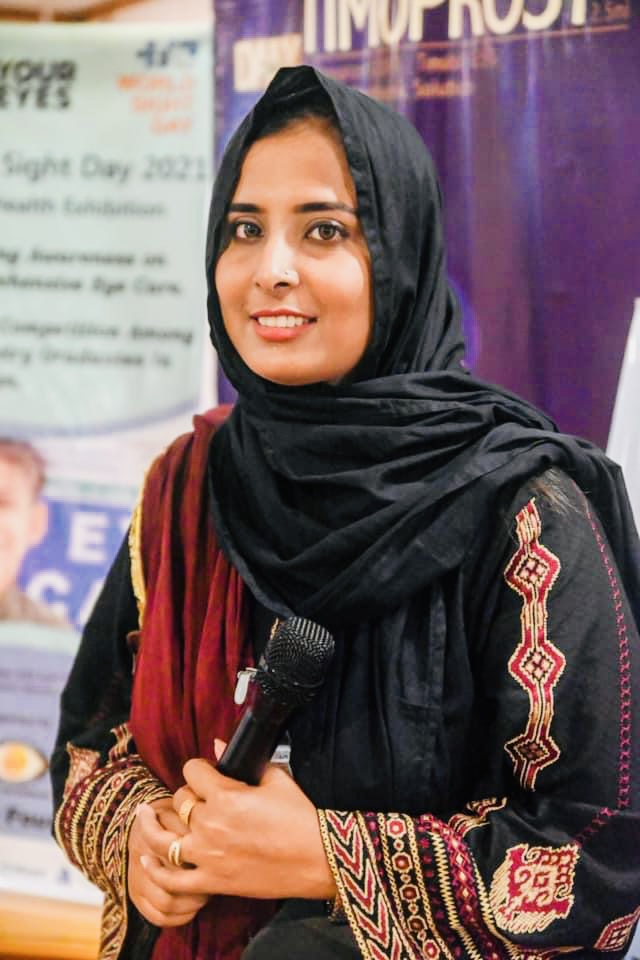
"I stepped into eye health because, as someone with vision impairment, I don’t just see the challenges—I experience them. My goal is to break down the barriers that hold back underserved communities, especially women, girls, and marginalized groups, from accessing the care and opportunities they deserve. With passion and purpose, I strive to make life easier for others and create a world where equity isn’t just an ideal but a reality for all." 

Read Story

Mattan

Organisation: Young Systems Leaders
Location: Israel

“I started my career in eye health because I saw the vast unmet need and inequities in access to care, and the potential for enormous impact. 
My goal is to bridge the gap between eye health policy and service delivery in underrepresented areas through research and advocacy. 
I’m committed to building a future where evidence and equity drive decision-making in eye care.” 

Read Story
Close window

Somali Eye Care is a non-profit eye care organization based in Somalia. One of our free eye care services is school eye screening.

In many Somali schools, children sit in silence, unable to see the board, unable to follow lessons not because they lack intelligence, but because they lack clear vision. Most have never had even a simple eye test.

With only the most basic tools a chart and a torch our team enters classrooms and begins to change lives. For a child, a single test can mean the difference between falling behind or finally having the chance to learn with confidence.

Even with limited resources, we do our best. Because to us, sight is not a privilege it is hope, dignity, and a child’s future.

Somali Eye Care

Organisation: Somali Eye Care
Location: Somalia

Somali Eye Care is a non-profit eye care organization based in Somalia. One of our free eye care services is school eye screening.

Close window

Stoic and silent, Paul, 90, sits in the van en route to City Eye Hospital. He’s scheduled for free sight-restoring surgery supported by Cure Blindness Project. It’d been three years since he’d been able to see his children’s faces. He desperately wants the surgery but he is afraid.  


If anyone understands the fear and isolation of being blind, it’s Stevenson. He’d been unable to see until recently. City Eye Hospital in Nyeri, Kenya performed cataract surgery on his left eye. He is returning to the hospital to have his right eye corrected.   


“Since I was helped, I want to help others,” explains Stevenson, 82.  


Stevenson assigns himself in charge of Paul’s care: holding his hand and leading him to the pre-op testing stations, sitting beside him as they wait.  


Stevenson enters the operating theater first. Twenty minutes later he’s done. Paul waits patiently for his turn.   


“The doctors will fix you,” Stevenson says, gently patting Paul’s back. “There is nothing to be afraid of. Tomorrow when we can see again, we dance.”  


As promised, there is dancing. And a little singing. The two celebrate together and staff members join in. It’s difficult not to dance when joy fills the room. 

Paul

Organisation: Cure Blindness Project
Location: Kenya

“The doctors will fix you. There is nothing to be afraid of. Tomorrow when we can see again, we dance.” 
At Cure Blindness Project, there is often dancing. And a little singing. Here, patients celebrate together with staff members joining in after bandages are removed following a free cataract surgery. It’s difficult not to dance when joy fills the room.

Close window

I made an appointment with an Optometrist for a stye and walked out with a glaucoma diagnosis. My world shifted that day - I went through shock and denial to acceptance and advocacy. Everything I knew about glaucoma was blown out of the water. I thought you had to be a ‘certain’ age, have high eye pressure, and problems with your sight. Even though I had regular eye exams my glaucoma wasn’t diagnosed until I had lost a good amount of sight. My pressures were normal, I wasn’t having vision issues, and I was younger than the typical glaucoma patient - no red flags! Now, I know glaucoma can be diagnosed at any age - even with normal pressure. I turned my glaucoma into a way to reach out and help others going through their own diagnosis. I used background in medical sales and surgical training to research the disease and reach out to doctors all over the world for answers. Eventually becoming a coach for other patients and advocating for sight all the way up to Capitol Hill in DC. I appreciate the sight I have and will never give up fighting to keep it! 

Hillary A. Golden

Location: USA

A stye brought me to the optometrist, but a glaucoma diagnosis shocked me after regular eye exams. Normal pressure and no symptoms but lost sight. I researched globally, coached others, and even advocated on Capitol Hill. Appreciating and fighting for my sight every step of the way.

Close window

I was part of a team conducting school vision screening at various schools within driving distance of our base for 2 weeks at Makeni, in Sierra Leone. On this day we were visiting Mayolor town about 14km away. We screened 274 children and 52 adults on this day, which included most of the teachers. On arrival at each school we would meet with the headmaster and senior teachers and explain our need for suitable buildings to undertake the screening process. Inevitably this entailed rearranging one or two classrooms to suit our needs. One for carrying out the initial vision and eye health checks and another for performing a sight examination for those referred from the screening process. The image depicts one of the children having his vision checked using an E chart. It is not obvious in the photo but he has covered his left eye with a cupped hand and so we are checking how far down he can correctly identify the tumbling E letter orientation. By pointing his free hand up, down, to the left or right it becomes a very quick and accurate method of confirming an individuals unaided sight. In this case you may notice that some of his classmates have started to laugh. This is because he was the first child in the class to easily get to the bottom line with no effort, and all his friends were amazed at how confident he was.

I was volunteering on my 19th eye care project, most of them using my Optometry expertise with the UK charity Vision Aid Overseas. Increasingly I have balanced the Optometry aspects of the trips with taking images to highlight this much needed work. It is great to know that for at least some individuals we have been able to help. Good sight means finishing school, it means seeing well enough to mark homework, to count money at the market, to see your grand children properly. We should all have the right to sight and the means to have it assessed wherever we may live in the world. 


Graham

Organisation: Behind the Picture
Location: Sierra Leone
Photographer: Graham Coates

"I was part of a team conducting school vision screening at various schools within driving distance of our base for 2 weeks at Makeni, in Sierra Leone. On this day we were visiting Mayolor town about 14km away. We screened 274 children and 52 adults on this day, which included most of the teachers. On arrival at each school we would meet with the headmaster and senior teachers and explain our need for suitable buildings to undertake the screening process."


Close window

What is it about this image that you love? 

It is a picture of a couple from a very rural area in Timor-Leste after Cataract surgery on their both eyes. What I love the most is their smiles when they know that everything was going well, and there is hope for them to see again.  

Do you remember anything about the subject? For example, were the patients shy to have their pictures taken, funny, curious? From memory, these two are husband and wife. Do you remember anything about them, their bond? 

Well, actually I was planning to take their picture after the surgery, because it is rare to see a couple together come for operation. It was a little bit funny, because a lady was shy to be hugged by her husband and didn’t want to take photo. We took many photos, but this photo was good in comparison with others.  

This couple live in a village far away from the capital. They live alone by themselves in a small house. Once their relative came to visit and found that they couldn’t see. For this purpose, their relative brought them to the eye clinic in the capital for further consultation and treatment.  

Do you recall anything about the location on that day? For example, was the hospital busy? What was happening behind the scenes? 

Eye clinic is the only eyes services available in the country. So, all  of cases come to eye clinic. On that day, there were a lot of patients for consultation. One of the Eyecare nurse in the clinic came to inform me that there was a couple with bilateral hypermature cataract and need for consultation. They came on Friday morning. After the examination and investigation done, I planned for bilateral SICS in one session for both. I explained about the pre-op, intra-op and post-op procedures and also self-care after the operation to the relative. The couple was afraid in the beginning but accepted for operation after a detailed explanation about the benefit after the operation. After their acceptance, I straight plan for the surgery the next Monday. And at the next day, they both were very happy because after years, they can see again.  

What about shooting this project did you find interesting? For example, the sheer need for eye care services? 

It was interesting to shoot this project. At the same time, we used the photo to encourage those people in rural area to come for eye consultation. Because there is still lack of knowledges of people about eye health and many of them still afraid to get operated their cataracts. And I do believe that in the next few years, the quality of the eye health services in Timor-Leste will be better.  

Frenky

Organisation: Behind the Picture
Location: Timor-Leste
Photographer: Frenky Ramiro de Jesus 

Photographer, Frenky, took this picture of a couple from a very rural area in Timor-Leste after Cataract surgery on their both eyes. What I love the most is their smiles when they know that everything was going well, and there is hope for them to see again. 


Close window

“At 65 years old, [my] life in Mbeya Region has always been about the land and the rhythms of farming. My husband and I tended our fields together, until he left and the shadows began creeping into my world. 

It started with a slight blurring of my vision, almost like looking through fog. At first, I thought it was a joke—a temporary nuisance that would fade with time. But days turned into weeks, and soon I could barely see the crops I once nurtured. It was then that those around me said I have cataracts.” 

Farming alone became a daunting task for Stephanie Kaloto. Without sight she could no longer distinguish shapes and every step felt uncertain.  

Her family learned of a free cataract outreach supported by Cure Blindness Project in partnership with Helen Keller Intl.  

When doctors removed Stephanie’s bandages, tears streamed down Stephanie’s cheeks.  

“I may be older now, my energy waning,” Stephanie says, “but every moment is a gift I embrace with newfound appreciation. I feel like a child again, discovering the world afresh.” 

#helenkellerintl #that_tanzanianguy 

Stephanie

Organisation: Cure Blindness Project
Location: Tanzania

"The joy was overwhelming. Not just because I could see again, but because I knew I wouldn't be a burden to my children anymore. Their sacrifices and unwavering support had brought me back into the light."

Tanzanian farmer Stephanie Kaloto received sight-restoring cataract surgery at an outreach supported by Cure Blindness Project in partnership with Helen Keller, Intl.  

Close window

Photographer Neil:

"I like the fact that we were shown that classroom…at random…and it was full for students, and from the doorway where I took the photo there was a direct line of sight to her, and I think that not only was she the only one wearing glasses but she was perfectly framed in the classroom for the subsequent photo. We didn’t have to position her, light her or create the composition…it was totally natural. Serendipitous.
 

She had a lovely smile. She looked at us at first as did all the others, and then whilst I fiddled with the camera and took some test shots everyone just carried on listening to the teacher and then when we were ready I just waved at her and smiled and she smiled back…and then I took the photo. Again, she was totally natural and seemed very mature.  

We had just come from a large eye clinic and brought to the school just to get see if we could get some shots. Our goal was to find some students and choreograph a shot with them, ask them some questions etc. It was a large school and we arrived 10 minutes before their break…lunch I think…so in fact the only thing we achieved with the visit was this scene. No children were being screened at the time…I think it was a “let’s see what we find” kind of location. 

I was there with a couple of representatives from Operation Eyesight, and my cameraman colleague, Miguel Gutierrez, and we both had cameras. We met someone from the school who looked into a couple of classrooms and let us in. We had about 5 minutes before the bell went off for lunch so we just looked in the first classroom, stood close to the doorway and this is what we got.  

For this project we filmed in Kenya and India. We filmed the young and the old…the most vulnerable groups of course. I was particularly struck by the important role that children have in educating and supporting their families. In countries like Canada we tend to consider healthy eyesight as primarily a benefit to the recipient only….”you need glasses”…so I ensure my children have can study properly and enjoy life like everyone else.  

But in places where Operation Eyesight operates, having healthy vision in children has immediate societal benefits because the children play an important role in the family and community.  

They work around the house, in the yard, they feed the animals or help out in the fields. They go for food, and they care for the elders in multi-generational households. In Kenya, where trachoma is a big problem, the children learn about clean water and they go home and educate THEIR parents on the importance of clean water. The young are literally the teachers. 

So the community-led initiatives that we filmed, and the “hand-up, not hand-out’ approach of organizations like Operation Eyesight was extraordinary to film. These are huge community efforts (and communal living in these countries involves far more inter-dependence then here), and there was genuine pride at all levels when a cataract operation succeeded, or when a child got glasses. Because now these people were no longer burdens that needed constant help. They could now contribute. It’s literally a 100% reversal in fortune for the the person, their families and the community. "

Neil

Organisation: Operation Eyesight
Location: India
Photographer: Neil Oakshot

In places where Operation Eyesight operates, having healthy vision in children has immediate societal benefits because the children play an important role in the family and community.  

Close window

What I love about this image is the hope & happiness that I see through the little girl’s eyes.  

It’s not every day that a young girl in a city in Kashmir gets her picture taken to be published on the internet which would potentially have a global reach. When we briefed the students about the photography session, they were actually very excited, a little shy but excited as well.  

It was a pleasant afternoon, school was full of children of different age groups, screening was in process in one of the classrooms, children standing outside in a line waiting for their turn to come, everyone was coming out of the screening room with a huge smile.  

Most of these underprivileged children do not even get the opportunity to get their eye sights checked and then the opportunity to get the rightly powered eyeglasses. What found me very interested in shooting this project was the fact that there are esteemed individuals & organizations like the Brien Holden Vision Institute working out there to provide such opportunities to these children & their respective families.  

Mohammad

Organisation: Behind the Picture
Location: Kashmir
Photographer: Mohammad Omer

"It was a pleasant afternoon, school was full of children of different age groups, screening was in process in one of the classrooms, children standing outside in a line waiting for their turn to come, everyone was coming out of the screening room with a huge smile.  "

Close window

Each year, one exceptional ophthalmology resident is invited to complete a one-year post-graduate clinical training subspecialty in global medicine sponsored by Cure Blindness Project. The fellowship in partnership with the Byers Eye Institute at Stanford exposes young surgeons to challenges most likely not previously encountered in the United States.  


Selected participants spend two-thirds of the year working in Asia and Africa alongside Stanford Professor and Cure Blindness Project co-founder, Dr. Geoff Tabin. 


“An interesting phenomenon occurs when you start a global ophthalmology fellowship. While the focus of the trainee in all other realms is primarily, almost solely, on the quality of their training, in global ophthalmology the focus shifts to what the trainee will do for others—global partners, residents abroad, and others,” says Dr. Sean Collon, who recently completed his global fellowship.  


The fellowship exposes and encourages residents to pursue uncharted paths and establish new collaborations for maximum unique impact.  


#helenkellerintl #that_tanzanianguy #stanford 


Dr. Geoff

Organisation: Cure Blindness Project
Location: USA

Each year, Cure Blindness Project sponsors one ophthalmology resident for a global medicine fellowship with Stanford’s Byers Eye Institute. Spending most of the year in Asia and Africa with Dr. Geoff Tabin, fellows shift focus from personal training to serving others—building skills, forging collaborations, and creating lasting global impact.

Close window

Dr. Lloyd Williams changes lives. Motivated by a deep sense of purpose, Dr. Williams travels to places others won’t. A long-time volunteer with Cure Blindness Project, Dr. Williams travels frequently to South Sudan where he provides sight-restoring surgery to those suffering from cataract blindness.  

Cure Blindness Project began working in South Sudan in 2011. Since then, together with partners Cure Blindness Project has hosted 20 outreached providing sight-restoring surgeries to treat cataracts and trachomatous trichiasis (TT).  

For many, these outreaches are the only opportunity to receive much needed care. After years of conflict and only a handful of eye care professionals to serve a population of nearly 11 million, most South Sudanese lack adequate access to eye care. Soe data estimates the eastern African country has one ophthalmologist per 2.5 million people.  

#dukeuniversity #dukeglobalop Chris Hildreth/RoosterMedia | FB: @chris.hildreth.35 | IG: @roostermediaofficial 

Dr. Lloyd

Organisation: Cure Blindness Project
Location: USA

“When I first saw it happen, I thought, I can do this for the rest of my life and never feel like I wasted a minute.” 
Dr. Lloyd Williams, Volunteer Ophthalmologist, Cure Blindness Project  
Dr. Williams speaks to the feeling of removing a patient’s bandages and watching their face transform from confusion to joy as they realize they can see again.  

Close window

Kasturi Bishi, 64, lives with her husband in a small village in Odisha, India. The couple worked as blacksmiths, making and selling iron tools to earn a simple living. Their routine fell apart when Kasturi began losing her vision to cataracts. She couldn’t work, and her husband stayed home to care for her. With no income, treatment felt impossible. 
 
Hope came when they heard about a free eye screening camp supported by Trilochan Netralaya and Cure Blindness Project. There, she was identified with mature cataracts in both eyes and referred to Trilochan Netralaya for surgery. 
 
With quiet courage, Kasturi underwent the procedure—free of cost, with support from Cure Blindness Project. Today, she can see clearly again. She’s back to work, back on her feet, and filled with joy and gratitude.

Kasturi

Organisation: Cure Blindness Project
Location: India

Kasturi Bishi, 64, a blacksmith from rural Odisha, lost her sight to cataracts, halting her livelihood. A free eye camp by Trilochan Netralaya, supported by Cure Blindness Project, offered surgery at no cost. Restored vision brought her back to work—and back to life—with renewed joy and gratitude.

Close window

Sushil Kumar Sen, 47, is a driver from a rural district in Odisha, India. Life was simple and steady with his wife and children — until cataracts blurred his vision and forced him off the road. Unable to work, he relied on his wife for everything, and the loss of independence left him feeling helpless. 

Then he heard about a free eye screening camp run by Trilochan Netralaya, a state-of-the-art institute committed to providing comprehensive and compassionate eye care.  

Holding on to hope, Sushil went. Staff identified him with mature cataracts in both eyes — and told him his vision could be restored through surgery, entirely free of cost. Cure Blindness Project works with Trilochan Netralaya and partners like them to offset surgery costs to expand access to care for those who need it most. 

The next day, he underwent his first surgery. When the bandage came off, Sushil could see again. Fifteen days later, he returned for the second surgery — and with it, the rest of his world came back into focus. 

Today, he’s back behind the wheel, working again, and living with pride and deep gratitude. 

Sushil

Organisation: Cure Blindness Project
Location: India

Sushil Kumar Sen, 47, a driver from rural Odisha, lost his livelihood when cataracts clouded his vision. A free eye camp by Trilochan Netralaya, supported by Cure Blindness Project, restored his sight through two surgeries. Now, back behind the wheel, he works with renewed pride and gratitude.

Close window

Mamite Tukuli, 45, sought out eye care to restore her daughter’s sight. Kortu, 10, lost her vision in both eyes to cataracts. Mamite also suffered from cataract blindness. “I wasn't worried about my own eye," she confessed, "At least I could see with one. But I worried constantly about my little girl." 
 
In a household where Mamite's husband had multiple wives and over twenty children, resources and attention were stretched thin. Mamite felt helpless, watching her daughter's future slip away. Kortu, too young to attend school, relied on her siblings for even the simplest tasks, often stumbling and falling in darkness.  

One day, hope arrived in the form of a passing car speaker announcing free treatment, including transportation, accommodation, and food.   
 
"I was so sad about my daughter's future. She hadn't started school; she couldn't do anything by herself. Her sisters and brothers helped her go to the toilet, and she fell on the ground so many times. We were all so sad, and we didn't know what to do." 
 
Free surgery at a Cure Blindness Project-supported outreach restored sight to both mother and daughter. "She couldn't smile within these two years," Mamite exclaimed, her own face radiant with happiness. "Now she is smiling! Thanks God and all the doctors here. We both can see now!" 

Mamite

Organisation: Cure Blindness Project
Location: Ethiopia

Free surgery at a Cure Blindness Project-supported outreach in Ethiopia restored sight to a mother and her daughter.
"She couldn't smile within these two years (when her daughter was bilaterally blind)," Mamite exclaims, her own face radiant with happiness. "Now she is smiling! Thanks God and all the doctors here. We both can see now!" 

Close window

Aldeia em Foco is a non-profit born from attentive listening and transformative action in response to the challenges indigenous populations face in accessing eye care in Brazil.

Its origins trace back to an initiative by the Suel Abujamra Institute (ISA), a traditional partner of the SUS, which aimed to provide ophthalmological care to over 1,500 indigenous people in a remote community in the country’s interior. However, due to logistical limitations and difficult access to the region, the mission concluded frustratingly: only just over 300 indigenous people were treated.

Caio Abujamra, ISA's president understood that a solution rooted in the reality of indigenous peoples  required closer listening, an adapted methodology and a structure designed to bring health to the heart of the forest.

Thus, Aldeia em Foco was born initially a pioneering project within ISA, it is now an independent NGO with its own identity and transformative mission. Co-financed by ISA, BID LAB in partnership with the Government of Japan, and the L'Occitane Foundation, the project uses cutting-edge portable equipment, AI and teleophthalmology to provide quality eye care to Brazil’s most isolated regions.

More than a project is a movement of respect, reparation, and hope for the future.

Aldeia em Foco

Organisation: Suel Abujamra Institute
Location: Brazil

In addition to the care in São Paulo, the Suel Abujamra Institute conducts philanthropic actions throughout Brazil, expanding access to eyecare for thousands who face difficulties in obtaining treatment.

We believe that every story counts. Over four decades, the Institute has been dedicated to changing lives through vision.

Close window

Stephanie was only six months old when her mother, Irene, discovered that she could barely see. From that point on, it became a fierce battle to give her daughter the “blessing” of sight. As a cleaning assistant, Irene went from doctor to doctor in search of a solution for the congenital cataract that clouded her daughter’s eyes. She tried in Teresina (PI), Fortaleza, and São Paulo. She couldn’t afford the surgery. That´s when the Suel Abujamra Institute crossed Sthefany’s path.


“Thanks to God and the institute, to get my daughter’s surgery for free, and today she is studying and dreaming of getting a good job and a better life,” says Irene. Sthefany had surgery at 13 and is now 17, attending the 8th grade of elementary school.


The first years at school were difficult. “She couldn’t keep up with her classmates and became depressed, staying in her room because she suffered a lot of bullying,” recalls her mother. The condition is genetic and has already affected three people in the father’s family.


Now, Stephanie will receive free treatment for her strabismus. Irene has already scheduled pre-operative exams at the Suel Abujamra hospital.

Stephanie

Organisation: Suel Abujamra Institute
Location: Brazil

In addition to the care in São Paulo, the Suel Abujamra Institute conducts philanthropic actions throughout Brazil, expanding access to eyecare for thousands who face difficulties in obtaining treatment.

We believe that every story counts. The Institute has been dedicated to changing lives through vision over for 45 years.

Close window

Anyone who sees Lorrayne’s wide smile cannot imagine the difficult life she had because of strabismus until she was 30. As a child, she faced a lot of bullying and hurtful nicknames filled with prejudice. In her youth, she was often asked uncomfortable questions like, “Where are you looking?” Lorrayne suffered, but there was nothing she could do. She wore an eye patch until she was 8, but it didn’t bring satisfactory results. She needed surgery but couldn’t afford the R$ 10,000 cost.

She consulted doctors during her teenage years, but the procedure she needed was considered cosmetic, and public health insurance didn’t cover it. She cried because of bullying, and her mother would always go to school to complain, but it was in vain.

The situation changed when Lorrayne discovered the Verter Institute, which made her surgery possible for free. The tears she shed after removing the bandages revealed the depth of her emotion after so long searching for a solution. She stopped wearing the dark-tinted glasses she used to hide her strabismus, stopped taking photos looking down, saw her self-esteem soar, and eventually became a volunteer at Verter, helping others who, like her, need free treatment.

Lorrayne

Organisation: Renovatio
Location: Brazil

Renovatio is taking ophthalmology to the most remote and vulnerable places in Brazil With vehicles adapted into mobile eye clinics. Vertr Institute works together Renovatio.

Renovatio's story is evidence that every initiative can transform realities. Every consultation counts, every pair of eyeglasses donated counts, every story counts.

Close window

Two years ago, Fatama's life began to darken. Her vision gradually became blurry, accompanied by intense headaches and dizziness that seemed endless. At first, she tried to ignore it, holding onto the hope that everything would improve over time. But the pain became unbearable, and the loss of vision prevented her from moving forward.

It was then that she decided to seek help. At the ophthalmology center of Bachir Saleh Hospital, they conducted several tests and discovered the cause of her suffering: cataracts. The only solution was surgery in Bechar.

Thanks to the support of the Eyes of the world foundation, Fatama was able to undergo surgery. One of her eyes healed completely, restoring her vision. In the other, glaucoma prevents her from seeing with total clarity, but still, her world has changed.

Fatama was able to see the faces of her loved ones again, the blue sky, and the landscapes she thought she had lost. She regained her independence and, with it, the joy of living.

Fatama

Organisation: Eyes of the World Foundation
Location: Spain

Fatama endured years of pain, dizziness, and vision loss, ignoring symptoms until they became unbearable. Diagnosed with cataracts, she received surgery thanks to Eyes of the world. Today, she has regained sight in one eye—along with her autonomy, joy, and will to live. Her life has changed completely.

Close window

We helped someone who, due to the loss of her vision, couldn’t see even a palm’s length away, now greet us from 20 meters away. Mrs. Ubaldina, affected by diabetes, lost her sight due to cataracts. At first, she resisted the idea of surgery, but over time, with the support of those around her, she decided to take the courageous step that would transform her life.

Two years later, thanks to the Eyes of the World Foundation, Mrs. Ubaldina underwent successful surgery that restored her vision, but more importantly, it restored her hope. With her sight regained, she decided to start a business selling empanadas. She prepares them with dedication, while her daughter fries them, as Mrs. Ubaldina is afraid to get too close to the fire for fear it could affect her vision.

This is an example of how support can change a life. Thanks to the surgery and her courage, Mrs. Ubaldina has regained not only her ability to see but also the dream of having a better future for herself and her family.

Ubaldina

Organisation: Eyes of the world Foundation
Location: Spain

Mrs. Ubaldina could hardly see, but today she greets us from afar. She overcame her fear of surgery and, thanks to Eyes of the world, she recovered her sight. Now she sells empanadas with her daughter. Seeing again has allowed her to dream of a better future.

Close window

Fatima Zehra is a program management professional with over a decade of experience in eye health, human resource development, and disability-inclusive healthcare. She has been instrumental in strengthening health systems through strategic planning, policy development, and innovative program implementation, ensuring equitable and sustainable healthcare for marginalized communities.

She has led high-impact initiatives in collaboration with governments, international NGOs, and healthcare organizations, improving access to quality eye care for millions of people in underserved regions. An optometrist with a Master’s in Project Management, she also holds specialized training in Global Eye Health and Planning and Managing Eye Care Services from the London School of Hygiene & Tropical Medicine. As a national master trainer for Inclusive Eye Health and Safeguarding in Pakistan, she has played a pivotal role in strengthening the health workforce and promoting disability-inclusive practices.

She has contributed to the development of Pakistan’s national allied visual sciences curriculum and an Inclusive Eye Health module. Her expertise in trachoma mapping, service assessments, and participatory evaluations was instrumental in Pakistan being declared trachoma-free by WHO in 2024.

Her contributions have earned global recognition, including the Eye Health Hero Award (2020) and the Young Systems Leader Award (2024) from the International Agency for the Prevention of Blindness (IAPB).

Fatima

Organisation: Young Systems Leaders
Location: Pakistan

"I stepped into eye health because, as someone with vision impairment, I don’t just see the challenges—I experience them. My goal is to break down the barriers that hold back underserved communities, especially women, girls, and marginalized groups, from accessing the care and opportunities they deserve. With passion and purpose, I strive to make life easier for others and create a world where equity isn’t just an ideal but a reality for all." 

Close window

“I started my career in eye health because I saw the vast unmet need and inequities in access to care, and the potential for enormous impact. 
My goal is to bridge the gap between eye health policy and service delivery in underrepresented areas through research and advocacy. 
I’m committed to building a future where evidence and equity drive decision-making in eye care.” 

Mattan

Organisation: Young Systems Leaders
Location: Israel

“I started my career in eye health because I saw the vast unmet need and inequities in access to care, and the potential for enormous impact. 
My goal is to bridge the gap between eye health policy and service delivery in underrepresented areas through research and advocacy. 
I’m committed to building a future where evidence and equity drive decision-making in eye care.” 

Stay in touch

Receive all the latest news, webinars, updates, events and more right to your inbox. 

Join our Mailing List